what oven to buy

What oven do I buy for my restaurant ?

Buying the Right Oven – by Dan Bendall

In most foodservice operations, you need at least one type of oven, but the trick is to be sure that you match your cooking needs to the proper oven type and size. Here are some of the oven types that will likely fit your needs.

Deck Ovens. The standard deck of a deck oven is built of steel and made to hold baking pans. Most are also available with a stone hearth for baking breads and pizzas directly on the deck. A good deck oven can run from several thousand dollars to well over $20,000. It provide superior browning for items such as chicken, fish, casseroles and, of course, pizza. Footprints range from an 18” square countertop deck unit to 84” x 51” deck ovens geared for high-volume restaurants. Operators can also stack three to four oven decks to increase capacity and production.

When specifying a deck oven for an existing operation, confirm that the unit will fit through necessary doorways into the kitchen. You may have to remove the legs on some models to fit through narrow spaces.

Convection Ovens. The convection oven adds forced-air movement to reduce cook times. Convection ovens can often be operated at a lower temperature than traditional deck ovens while cooking more evenly. In operation, the results are consistent temperatures throughout the oven, meaning pans usually do not need to be shifted or turned during cooking as is often necessary in a deck oven. Also, several tiers of product can be cooked in the same convection oven cavity while achieving an evenly baked product throughout..

Low Temp and Cook & Hold. Low-temperature roasting is usually done at 200°F to 225°F for long periods to reduce shrinkage. These ovens are often not required to be under a hood and they can be purchased with casters so they can be wheeled around.

Some other things to consider about low-temp ovens: Some are available with smoker attachments, convenience foods can be prepared well in cook and hold ovens and frozen prepared items are often well suited for low-oven cooking.

High-Speed-Ovens. Many high-speed ovens use hot-air jets to strip away the cool layer around food better than a traditional convection oven where air is only blown across the surface to be cooked. The process is able to bake a pizza or other thin items in less time than conventional means. Batch ovens, which also cook at high speed, are usually countertop units with doors about two feet square. They generally do not require hoods, and often use microwaves as an additional energy source to penetrate the product and cook food even faster.

Also consider conveyor ovens, which are available from countertop models to stackable floor units. Countertop models have narrow conveyor belts of 14” to 18” wide, good for one platter or pizza. The counter top and floor models are often stackable.

Things to consider when purchasing an oven:

• In most areas of the country, gas is less expensive to use compared to electricity, but availability of utilities and local fuel costs should be a determining factor in the fuel source decision.

• Exhaust hoods are usually required over gas and electric ovens. A true wood-burning oven will always require a hood and fire protection and may have other local restrictions.

• Have gas oven burners calibrated on a regular basis for optimum fuel efficiency and best product heating. Electric ovens should also have the elements checked and have the temperature calibrated periodically.

• If using electric ovens, high voltage units are often less costly in terms of energy usage.

• Stainless steel exterior surfaces are often worth the extra cost in increased life and easy clean up.

• Purchase only an NSF listed oven for sanitary features and AGA certified gas equipment and UL listed electric models. Look for ENERGY STAR electric and gas convection ovens.

Dan Bendall is a principal of FoodStrategy, a Maryland-based consulting firm specializing in planning foodservice facilities. He can be reached at dbendall@foodstrategy.com.
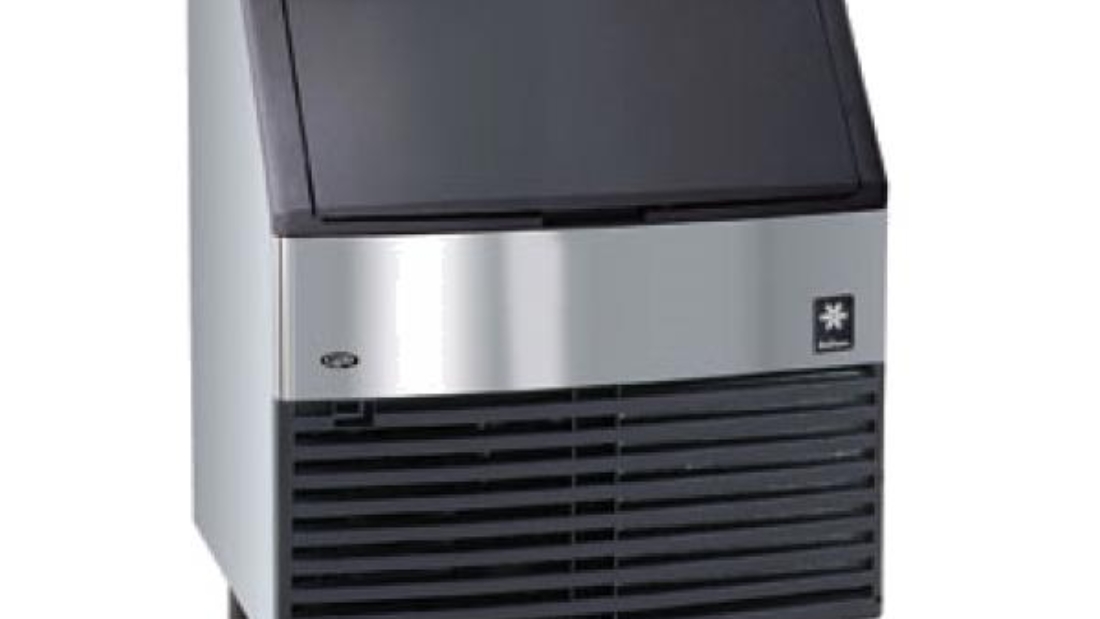
manitowoc ice machine

What Ice Machine should I Buy and Why?

So you want to buy an ice maker? What ice maker issues and considerations are important, and which ones are not? Well, Scotsman reminds you of a kilt; Hoshizaki has a penguin on their logo, Cornelius sounds like a vegetable, Ice-O-Matic sounds Irish, and Manitowoc machines have an interesting name. So maybe if you like penguins, your decision will be easy. But unfortunately, wise decisions are not made on such grounds. So on what grounds is a wise ice maker purchase decision made; If not penguins, then what?

First of all, we will clearly state that the only ice makers that we will consider are the ones manufactured by Manitowoc, Hoshizaki, and Scotsman. There are many other ice maker manufacturers, including Cornelius and Ice-O-Matic, but being in the refrigeration business for over 50 years has taught us that these three makers make up the great majority of ice machine purchases for a reason. Manitowoc, Hoshizaki, and Scotsman are reputable, well-designed, and backed by dependable service warranties. So now the question is: should I buy a Manitowoc, Hoshizaki, or a Scotsman? In a moment,we will look at a detailed comparison between Manitowoc, Hoshizaki, and Scotsman ice makers. We will specifically consider their ease of repair and their evaporators (the ice maker’s crux component).

icemachinecleaning

Ice Machine Preventive Maintenance

Preventive Maintenance ( PM ) is the key to maximum running efficiency, less down time, and longer life out of an ice machine.
The primary items for an ice machine PM  check are as follows:

Clean and sanitize the water system.
Clean air filters on air-cooled models.
Check external filter system and change cartridges as needed.
Check inlet water valve screens.
Conduct bearing and auger inspection on extruded ice makers.
Conduct a visual inspection of components, controls, and wiring for oil spots, loose wires, loose fasteners, corrosion, etc.
Clean the bin interior and unit exterior.

Follow this link to read the complete article by Danny Moore. click here

Clean and Sanitize

As ice forms on an ice machine evaporator plate, a separation occurs. Minerals separate from the water and form scale which sticks to the surfaces of the water system components. This scale will be more visible when the surfaces are dry. The color of the scale will vary due to the type of minerals in the local water supply. As an example, lime or calcium scale will be off white in color while iron scale will turn a rusty red color. Algae or slime growth may also occur in some locations. This is due to air or water-borne bacteria which can settle in the wet areas and grow.

Clean and Inspect

While you are waiting for the cleaning solution to do its job during the cleaning process, you can complete other steps in the PM check. Clean the condenser and/or air filter if included on the unit, and check the inlet water valve screen for restriction. Clean condenser fan blades.If the condenser coil is covered with grease, grime or dirt, use a non-corrosive cleaner and rinse thoroughly with water.  You may find it necessary to use a fin comb or brush on the coil fins. This is especially important on remote condenser units where

Flaker Bearing and Auger Inspection

Flakers produce ice on or inside an evaporator cylinder. The ice is broken away and extruded out of the cylinder by a gear motor-driven auger. Bearings allow the auger to rotate and maintain its positioning in the evaporator cylinder. Since the auger turns, bearing wear is eminent. A flaker bearing is a wear item. These bearings should be inspected per the manufacturers’ recommendations. the coil is subjected to outside elements.

Clean Exterior

The final step in the PM process is to clean the exterior. Use a soft cloth and a neutral cleaner to wipe down the stainless exterior of the unit and storage bin.

Harvest Ranch Logo

Dallo Enterprises, parent company of Harvest Ranch & Jonathon Markets has selected Frasco Services for their equipment repairs.

“Dallo Enterprises, parent company of Harvest Ranch and Jonathon Markets has selected Frasco
Services for their equipment repairs. Having 12 locations in the San Diego area, including Food Land,
Charcoal House, and The Junction Steakhouse, we are pleased with the opportunity to provide our services.
San Diego area reps Roger Espinoza and Marc Springer will be in charge of all services.”

biodriven92x55sandiego

Fryman Refrigeration Partners with Frasco Services in San Diego

Fryman Refrigeration, also known as Biodriven Services, has partnered with frasco services to handle the equipment repairs needed by their customers.  Biodriven remains commited to the restaurant oil recycling business, and will continue to provide those services to restaurants. We are extremely pleased that they have chosen us and look forward to this opportunity.

  BioDriven is a family owned and operated small business operating exclusively in the San Diego metropolitan area since 2007. As San Diego natives we value the local economy and environment. This “small town” philosophy drives everything we do.

We appreciate our clients, and take pride in offering innovative services that improve their profitability while simultaneously upholding our shared responsibility to society and the environment. Improving the San Diego restaurant community is our primary business.

Leanne Pomellittto, Savory & Sweet Catering

I have known and worked with Frasco Services for over 14 years both in their role as an equipment purchasing advisor and repair tech is invaluable. I am exceedingly happy with the results and its a pleasure to work with Frasco Services. They communicate well and gives us essential feedback as to the progress of the work. I wouldn’t hesitate to use the services of Frasco Services again.